
Installing BimlFlex
The following installers are available:
- BimlFlex Developer Installation
This installer includes all parts of the product framework and is suited for modelers, who use the BimlFlex Application for modeling and developers, who build the solution in BimlStudio and test the resulting packages in Visual Studio - BimlFlex Runtime Installation
This installer includes the required runtime components for servers that will execute SSIS packages
The current installers are available through the BimlFlex Release Notes. The BimlFlex Developer Installation comes as a small web installer that downloads the product packages during setup and as an offline installer that carries them inside one file for a machine that cannot download during setup. The BimlFlex Installers page lists every installer, the payload each carries and where each is downloaded from.
The BimlFlex Developer installation includes all components used in the BimlFlex framework:
- BimlStudio
- BimlFlex App
- SSIS Custom Components for SQL Server
- SSIS Custom Components for Snowflake
- Installation of new, or upgrades of existing, BimlFlex and BimlCatalog databases
The first time BimlStudio opens a BimlFlex project it will ask for a license key. Add a BimlFlex-enabled license key to enable the application. The key is validated online and once validation completes it is possible to run the applications. It is also possible to add the license key through the installation program.
Detailed Steps
The following detailed steps walk through the installation of BimlFlex
Download the BimlFlex installer
The current installers are available through the BimlFlex Release Notes. Download the web installer (bimlflexdevsetup_x64_<version>.exe), which downloads the BimlStudio, BimlFlex App and BimlFlex Operations Center packages from the versioned download folder during setup and installs with no download when those package files sit beside it, or the offline installer (bimlflexdevsetupoffline_x64_<version>.exe), which carries the three packages inside one file. The BimlFlex Installers page lists the sizes and the download addresses.
Install BimlFlex for developers
Run the installer to install the applications.
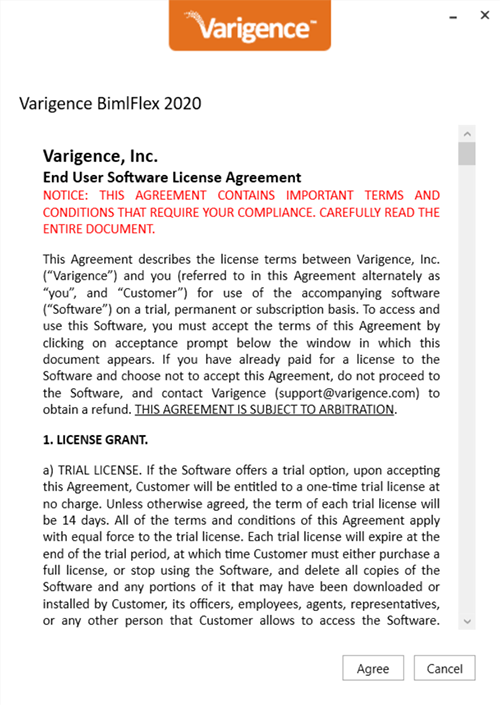
Installer steps
- Run the Installer
- Accept the License Agreement
- Enter License Key
If the installer can't identify an existing key, click theI already have a product keyif you have a valid key, or use the request form to request a trial key for BimlFlex. It is also possible to skip this step and add the License Key later - Choose where BimlFlex keeps your metadata
Files in a folder is the recommended choice and is selected by default. It needs no SQL Server for the metadata and works with Git. SQL Server database keeps the database installation working as it does today. With files chosen, the installer skips the BimlFlex metadata database step below. When you pick the database, the installer notes that you can move your metadata to the file mode whenever it suits you, at your own pace, with the steps in Migrate a BimlFlex database to files. - The main feature page allows choosing the applications and features to install.
For a BimlFlex developer installation, pick all. With the SQL Server database chosen as the metadata store, also check to install new, or upgrade existing, databases and projects. With files chosen, the installer does not show the Install or Upgrade BimlFlex Databases checkbox or the two database names under it. - Pick BimlFlex features to install
BimlFlex App: Install the BimlFlex Application as the main metadata management solution - Pick BimlStudio features to install
For most developer installations, choose to install both 32-bit and 64-bit versions - Pick Custom components to install
These are used to add additional functionality to SSIS Packages
Only identified available versions are available in the list. It is possible to force the installation of unavailable options
Click View Unavailable Features to add force installation of unavailable versions
right-click to force installation - Install or upgrade BimlFlex databases by adding the connection string and clicking add to add the database to the upgrade tasks
Use the Test button to test the connection string for existing databases. When a database test finds the server but no database, the installer says the database was not found and that setup creates it, and the review and progress screens read Create in place of Upgrade for that database
Backup existing databases before upgrade - Install or Upgrade BimlCatalog databases by adding the connection strings and clicking add to add the database to the upgrade tasks
Use the Test button to test the connection string for existing databases
Backup existing databases before upgrade - Review the installer tasks and allow the installation to occur
Once the installation concludes successfully, click finish to end the installer.
Refer to Getting Started with BimlFlex to get started with BimlFlex